
Published at Last updated at
If everyone supports circular packaging, what’s stopping progress?
Across the global PET packaging industry, the ambition for circular packaging has never been stronger. Brands, regulators and consumers all agree on the need for more recycled content and less waste. Yet progress remains uneven. Insights from Holland Colours’ Factory of the Future Packaging Industry Guide 2025 guide reveal five major recycling barriers that continue to challenge the industry and how innovation can help overcome them.
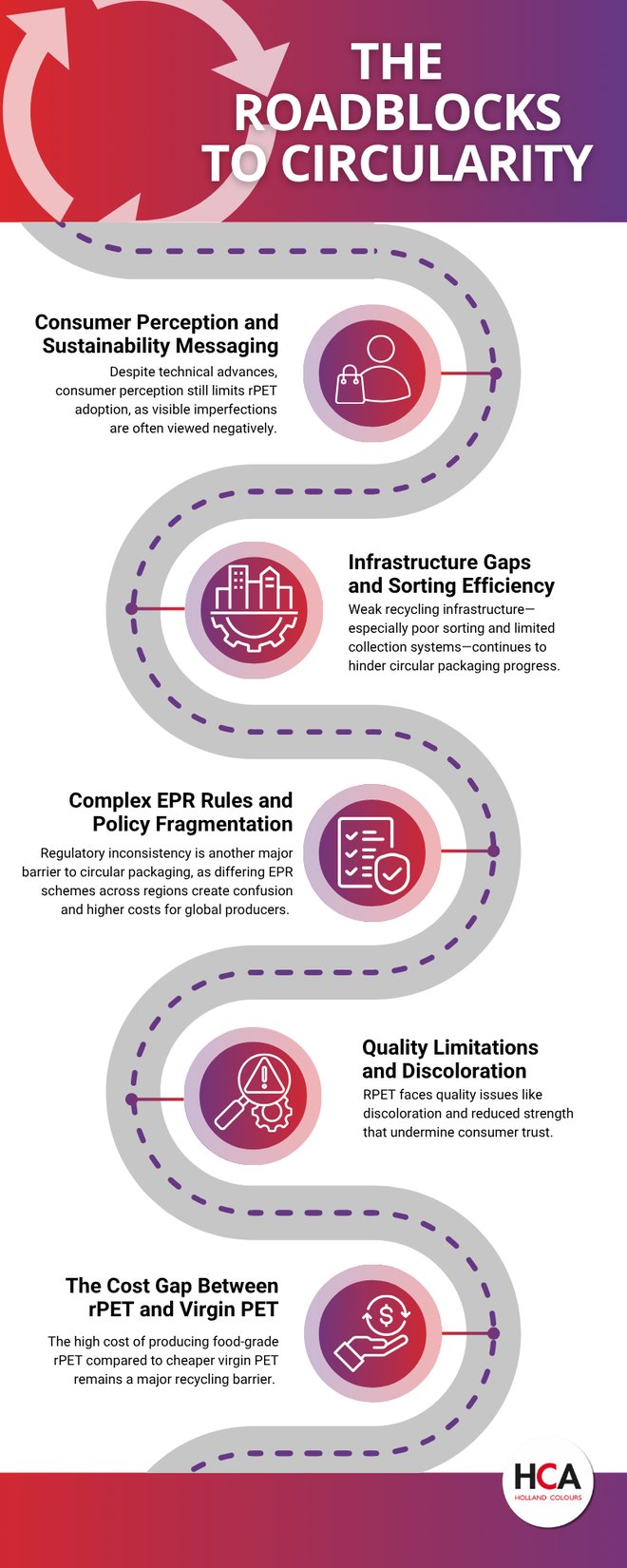
The Cost Gap Between rPET and Virgin PET
One of the most persistent recycling barriers is the cost gap between rPET and virgin PET. Producing food-grade rPET involves high costs for collection, cleaning, and contamination control, while virgin resin benefits from low-cost fossil feedstocks and established petrochemical networks.
Bridging this cost gap requires both policy and technology. Stronger incentives such as taxes on virgin resin and technical solutions like additive innovations can make PET recycling more affordable and scalable.
Quality Limitations and Discoloration
Even when cost issues are addressed, quality remains a challenge. Repeated recycling can lead to discoloration, haze, and variable strength - defects that, although safe, affect consumer trust. Many buyers still associate yellowish bottles with contamination or poor hygiene, limiting rPET acceptance in sensitive categories like food and dairy.
To tackle these recycling barriers, the industry is turning to sustainability-driven innovation. Technologies such as super-clean recycling, NIR sorting, and additives like Holland Colours’ ViscoBoost and CircStab help restore intrinsic viscosity and reduce discoloration, improving both visual and mechanical performance.
Complex EPR Rules and Policy Fragmentation
Another obstacle to circular packaging is the inconsistent regulatory landscape. EPR (Extended Producer Responsibility) schemes differ across regions, creating confusion for producers operating globally.
Europe enforces strict recycled-content laws, while the United States relies on state-level programs, and Asian countries are still building enforcement systems.
This lack of alignment increases administrative costs and slows innovation. Global harmonization of EPR frameworks would enable companies to design universally compliant packaging and focus resources on improving material quality instead of navigating complex legal requirements.
Infrastructure Gaps and Sorting Efficiency
The next mentioned roadblock proves that even the best policy or design cannot succeed without strong infrastructure. Across many markets, poor sorting efficiency and limited collection systems remain core recycling barriers.
Automated sorting technologies still struggle with black plastics, small items, or multi-layer packaging, all of which reduce bale purity and limit the supply of food-grade rPET.
However, innovation offers a way forward. AI-powered sorting lines, digital watermarking, and shared decontamination hubs are already improving PET recycling throughput and quality. Enhancing sorting efficiency will be essential to achieving large-scale circularity.
Consumer Perception and Sustainability Messaging
Even with technical progress, consumer perception remains a barrier. Slightly tinted or uneven rPET bottles are sometimes seen as inferior. Educating consumers about the environmental benefits of recycled materials and reframing imperfection as authenticity are key to building trust.
Leading brands now highlight sustainability as a design feature, positioning visible rPET content as a sign of environmental responsibility rather than compromise.

Turning Barriers into Breakthroughs
Each of these recycling barriers, from the cost gap and discoloration to fragmented EPR systems and low sorting efficiency, intersects on the same path: building smarter, cleaner, and more resilient recycling ecosystems.
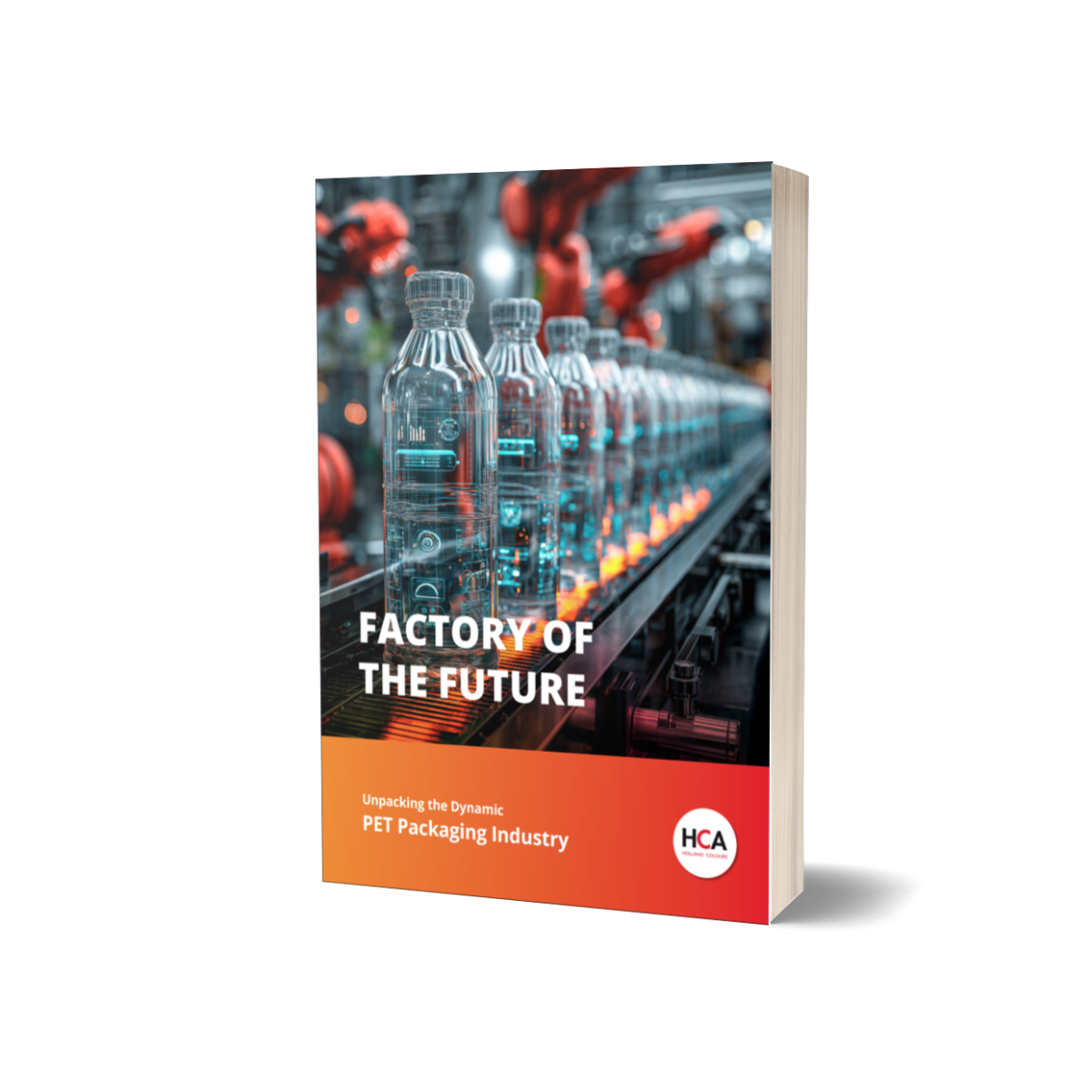
The guide Factory of the Future Packaging Industry Guide 2025 demonstrates how collaboration, digital tools, and advanced materials can transform PET recycling into a fully circular process.
Circular packaging is no longer a distant goal, it’s an achievable roadmap powered by sustainability, innovation and shared commitment across the value chain.
👉 Delve deeper into these industry shifts in our latest industry guide to discover practical solutions to these recycling barriers and your roadmap to achieving cost-efficient, high-quality, and sustainable circular packaging.
.png?width=560&height=360&name=Featured%20image%20size%20(28).png)