

Published at Last updated at
Why Black Shades Still Challenge Factory Efficiency
Black shades in alkyd systems are among the most widely used solutions in coatings production and at the same time, among the most demanding to handle on the factory floor.
Not because achieving a deep black appearance is always difficult, but because the process around it often is.
In many production environments, working with black in alkyd-based coatings still introduces unnecessary complexity. Thick pastes, long dissolving times and intensive handling slow down workflows and reduce flexibility. For factories increasingly focused on lean operations, this friction is becoming harder to accept.
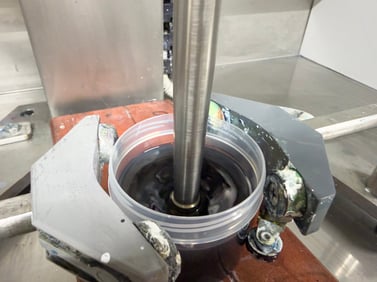
The real challenge lies in the process, not the chemistry
When black shades in alkyd systems are discussed, attention often goes to formulation details. In practice, however, the biggest challenges appear before and after formulation, during batch preparation, material handling, cleaning and scale-up.
Traditional paste-based systems can make production more rigid. They often require additional time, careful handling and corrections during processing. While these inefficiencies were once considered part of the job, today’s factories question whether they still fit a modern way of working.
Especially for manufacturers operating with small teams and high efficiency targets, every extra step matters.
A factory-first way of thinking
Coatings manufacturing is increasingly driven by factory reality. Decisions are no longer made only at lab level; they are shaped by what works reliably, cleanly and efficiently in daily production.
This shift changes how black shades in alkyd systems are evaluated. The focus moves away from what is theoretically possible and toward what is practically manageable.
This is where solid technology offers a different perspective.
.jpg?width=490&height=276&name=Image%20(43).jpg)
How solid technology simplifies working with black in alkyd systems
Our solids for coatings Holcopearl® Ultra Black solution fundamentally change how black shades behave in alkyd production. Instead of working around thick pastes, manufacturers gain more control over dosing, handling and dissolving behavior.
On the factory floor, this translates into:
- Shorter and more predictable dissolving times
- Cleaner handling and easier material management
- Reduced waste and fewer correction steps
- More stable and repeatable workflows
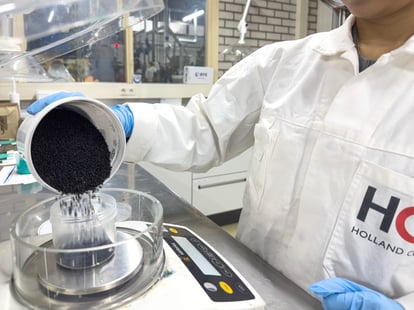
Bart Volders, R&D Manager at IKO Group, responsible for Touwen involved in factory trials described the result simply:
"A deep, glossy black designed to flow smoothly through the process."
The key is not changing alkyd chemistry itself, but adapting it to modern production demands.

We guide you to innovation
At Holland Colours, solid technology is not new. It is the foundation of our solids for coatings product family, developed for both solvent-based and water-based coatings.
Applying this expertise to alkyd systems is a natural extension of that approach. It reflects a broader belief: factory efficiency should not be limited by material handling complexity.
As manufacturers continue to optimize production today and prepare for future transitions, solid technology supports a more controlled, efficient and adaptable way of working.
Black shades in alkyd systems do not need to remain complex by default. With the right solid technology, manufacturers can simplify processes, improve efficiency and regain control where it matters most: on the factory floor.
Solid technology is not a shortcut, it is a practical response to how coatings are made today.


.png?width=560&height=360&name=Featured%20image%20size%20(28).png)